 case study - museum experience
How do you make a hundred-year-old museum feel alive to a generation that grew up online?
"Traditional display methods feel passive and outdated for digitally native generations - creating a disconnect that reduces interest in visiting and experiencing museums."
CSMVS - formerly the Prince of Wales Museum - is one of Mumbai's most iconic institutions: a monumental Indo-Saracenic building holding over 70,000 artifacts spanning 5,000 years, from Harappan seals to Emperor Akbar's armour. It draws more than a million visitors a year. But very few of them are under twenty-four. Our brief, set by the museum's curators, was to close that gap - not by simplifying the collection, but by changing how it's discovered.
Four groups, one museum.
Digitally native youth, 16-24
See traditional museums as passive and text-heavy. Seek gamified, highly interactive, visually stimulating experiences.
General public & museum-goers
Regular visitors and tourists looking for a more personalised, guided, hands-on experience at CSMVS.
CSMVS curators & management
Invested in modernising the museum's brand, increasing footfall, and safely displaying fragile artifacts.
Transit & campus partners
Times OOH for transit-station billboards, and host colleges facilitating the campus pop-up exhibitions.
A layer for before you arrive, a layer for while you're there, and a layer that meets you halfway.
A visual refresh alone wouldn't solve this. The final solution operates across three connected layers, each addressing a different stage of the visitor's journey - from a billboard at a train station, to a gallery floor, to a college campus that's never seen the museum at all.
Rebranding & Awareness
A contemporary yet culturally rooted identity - new typography, colour and motifs - carried into transit billboards, zines and social campaigns that reposition CSMVS as approachable and relevant before anyone sets foot inside.
Interactive Installation
Gesture-tracked 3D projections let visitors handle fragile coins, vases and sculptures without touching them, while QR-based "Networks of the Past" storytelling turns isolated objects into one connected, gamified journey.
Decentralised Outreach
Curated, tech-enabled pop-up exhibitions travel directly to college campuses - taking the interactive experience to youth who might never otherwise walk through the museum's doors.
A brand that carries heritage without dressing up as a symbol.
Early research explored a wide field of heritage motifs - the museum's own Indo-Saracenic dome, the lotus, Maratha sun crests, jali lattice work. Each was rich in meaning, and each risked losing its detail the moment it was shrunk to a favicon. So the final mark went the other way: typography-driven, refined and restrained, letting the collection itself carry the symbolism instead.
Aa
PP Editorial New - Primary
A serif with editorial restraint, echoing printed archives and manuscripts. Carries headlines and storytelling moments with an intellectual, timeless tone.
Aa
General Sans - Secondary
Clean geometry as a contemporary counterbalance - used for captions, gallery information, navigation and digital interfaces where clarity matters most.
Six clusters, twenty galleries.
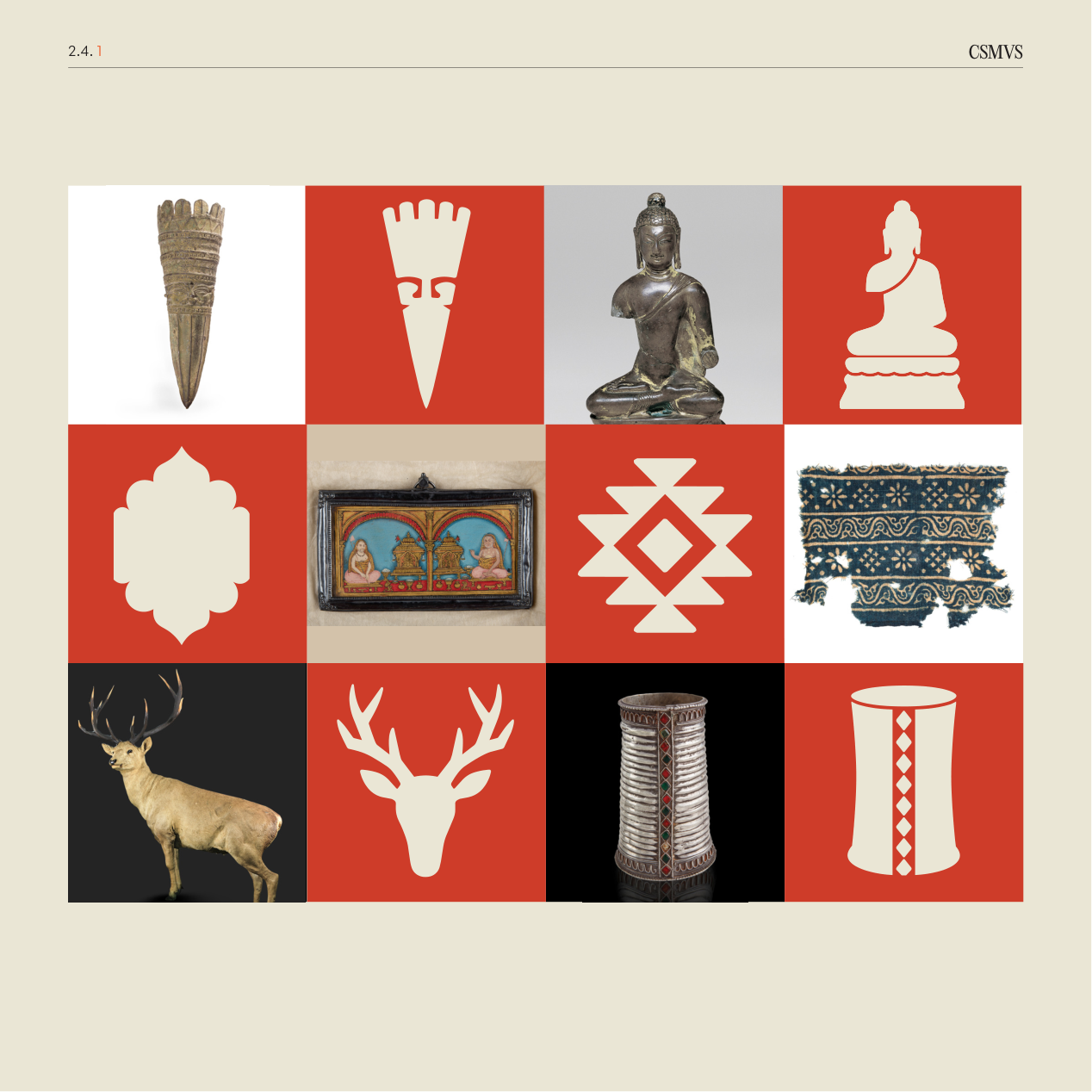
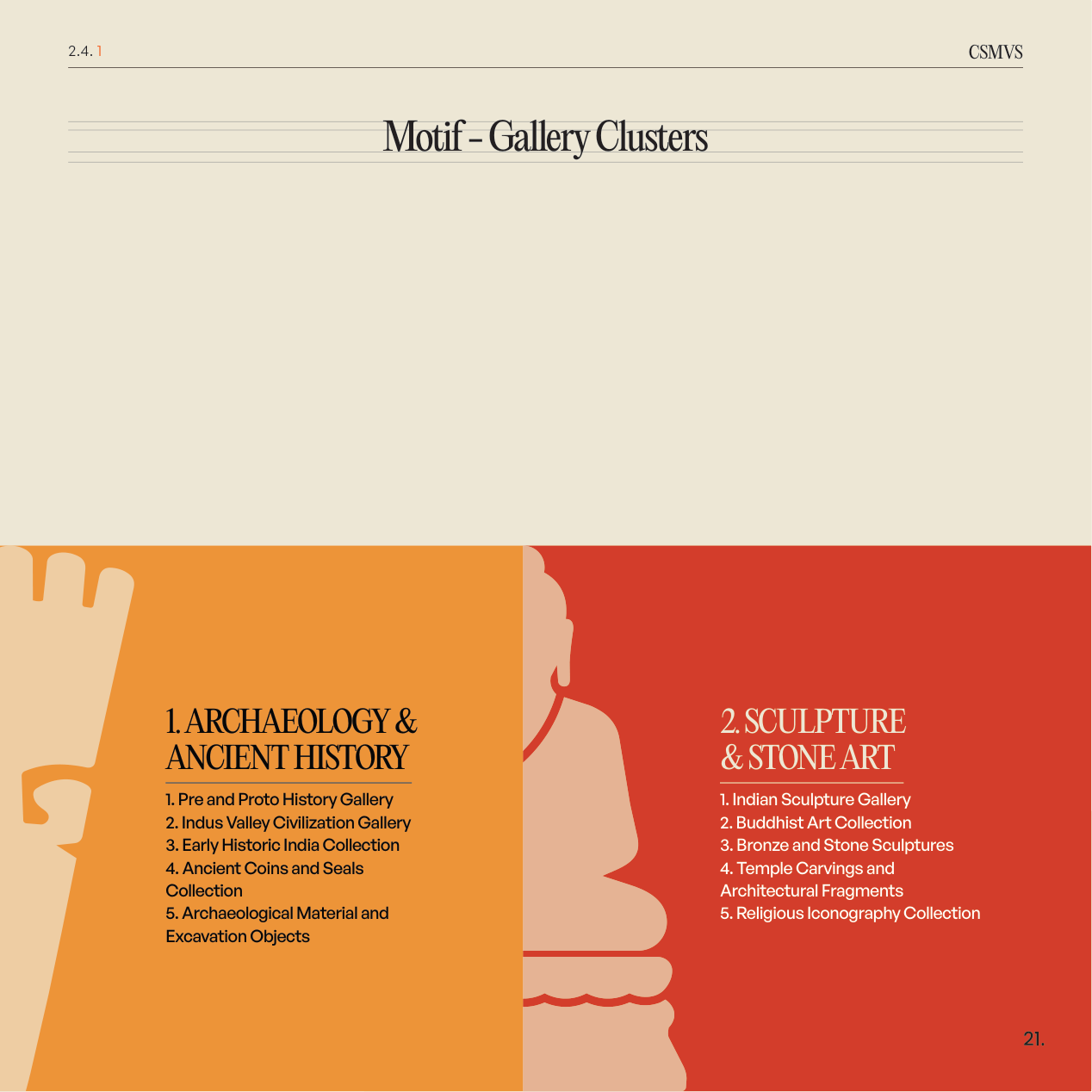
Rather than decorative icons, each motif is a simplified silhouette drawn from an object already inside CSMVS - organising the museum's twenty galleries into six recognisable clusters that work across signage, merchandise and the digital experience.
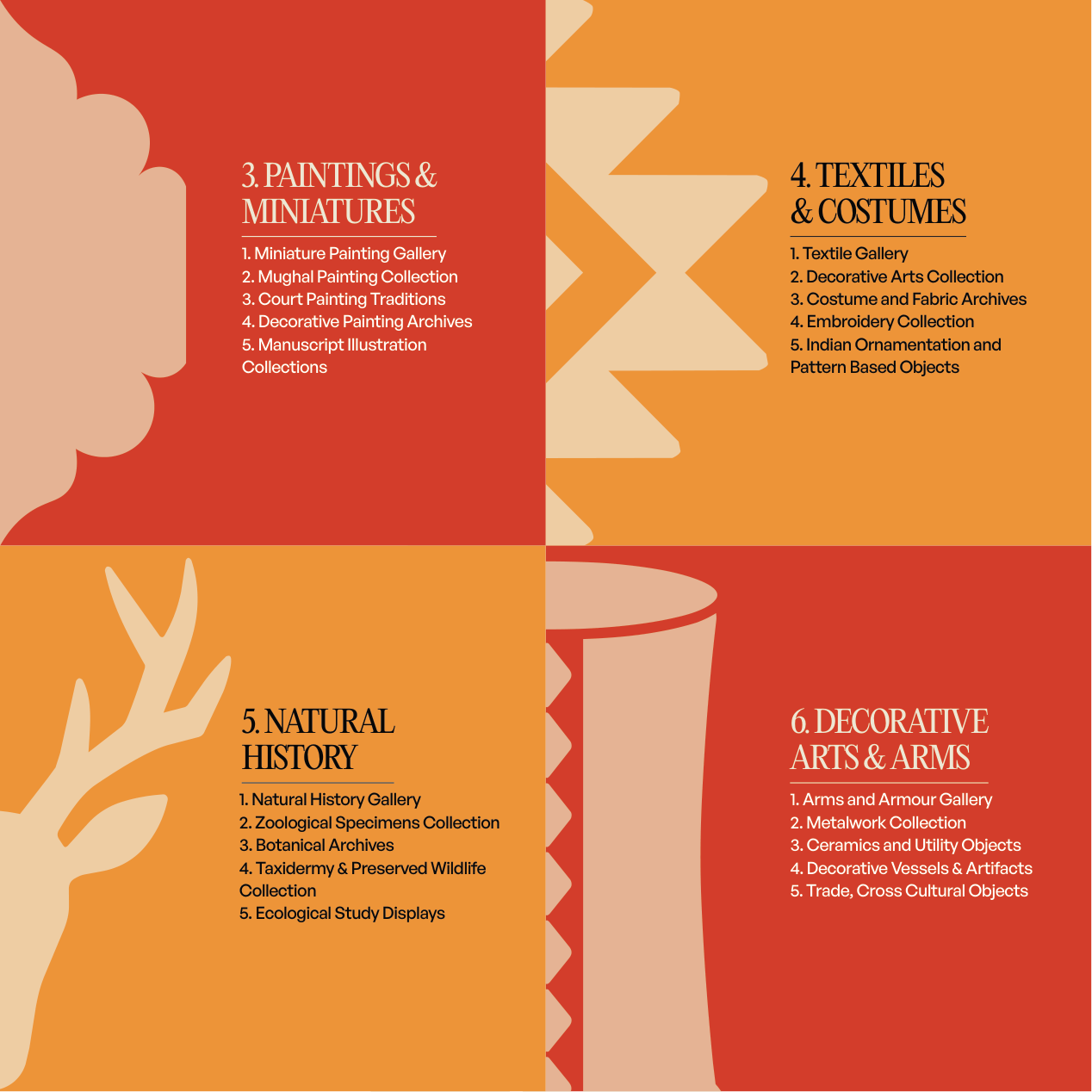
Bringing the museum to where the audience already is.
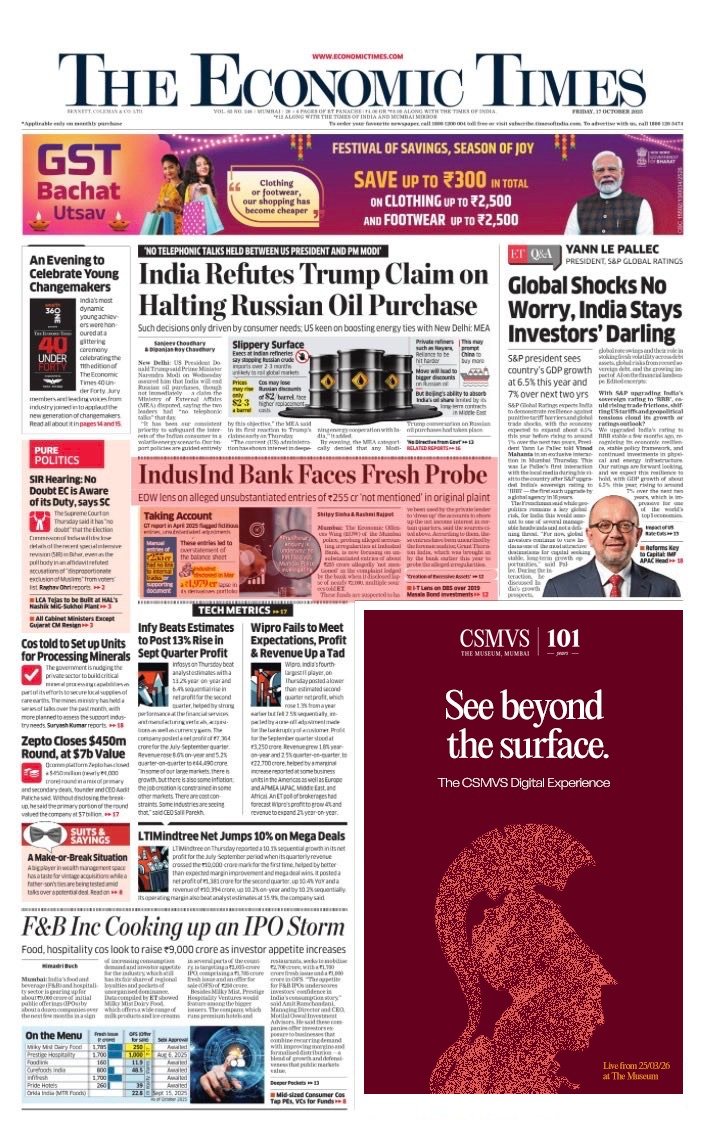
Billboards, transit posters and a national newspaper placement carry the identity into daily commutes - functioning less like advertisements and more like cultural invitations that pull curiosity outside the museum's walls.
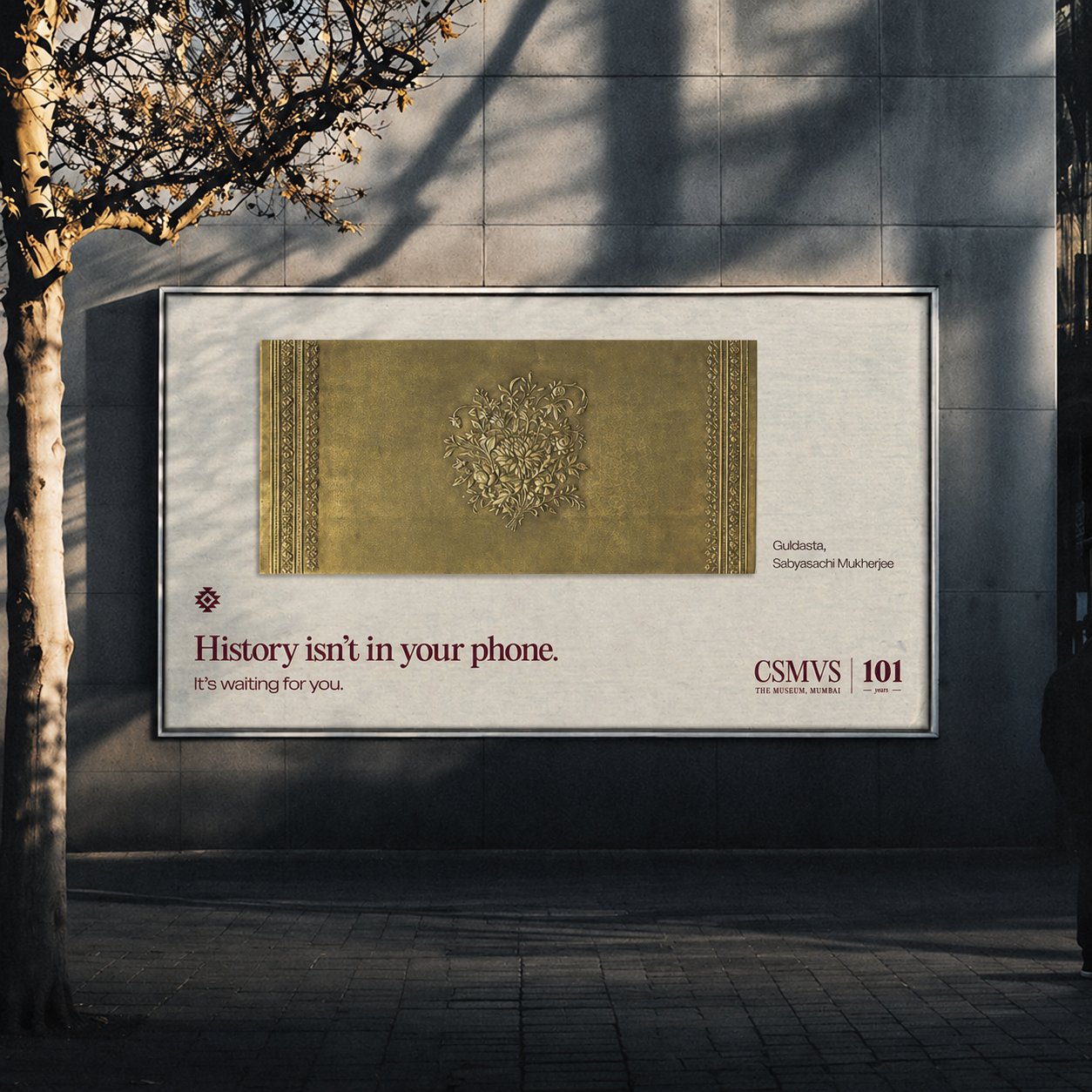
"History isn't in your phone. It's waiting for you." - transit billboard, featuring Guldasta by Sabyasachi Mukherjee
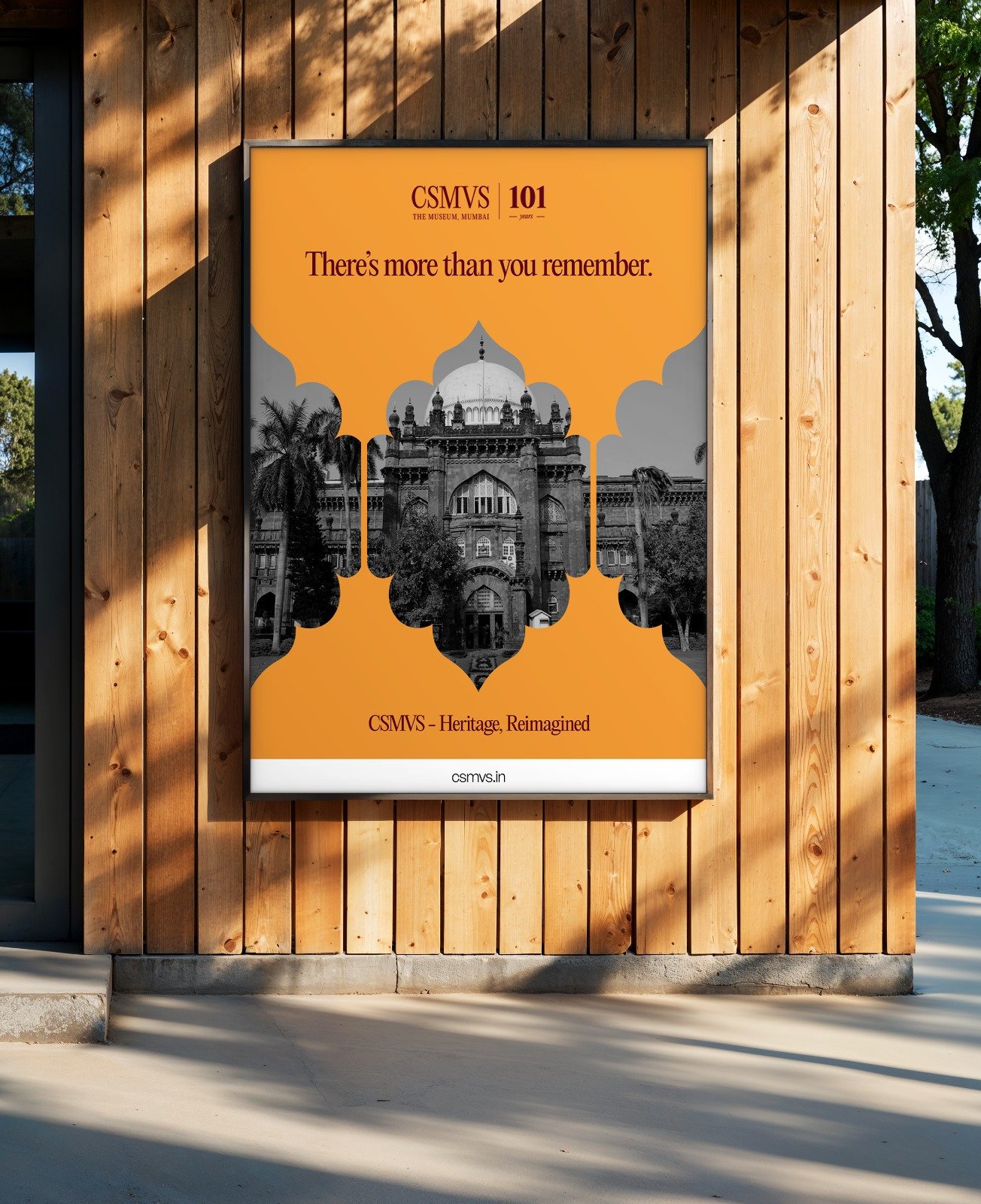
"There's more than you remember." - outdoor poster
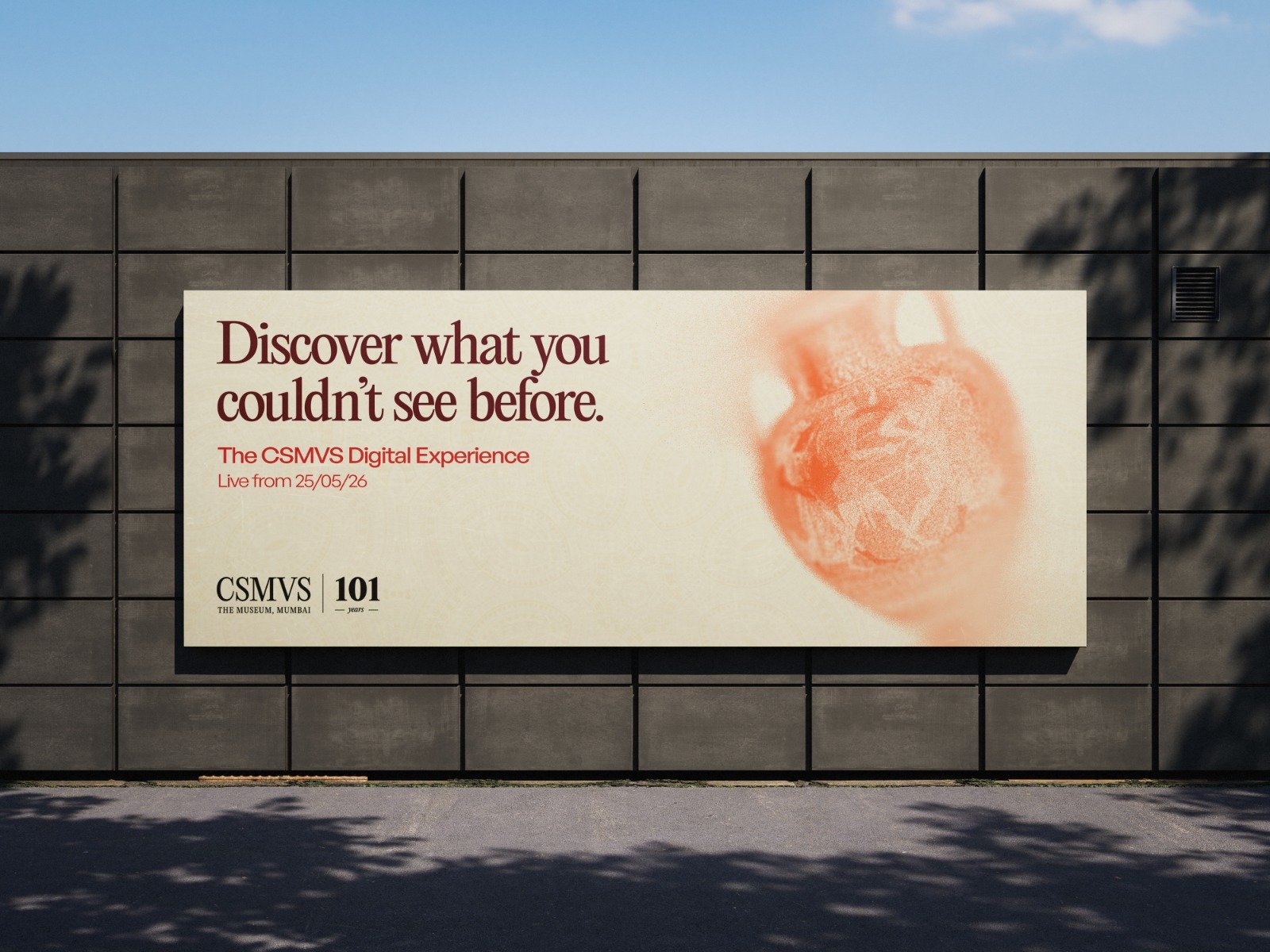
"Discover what you couldn't see before." - announcing the digital experience
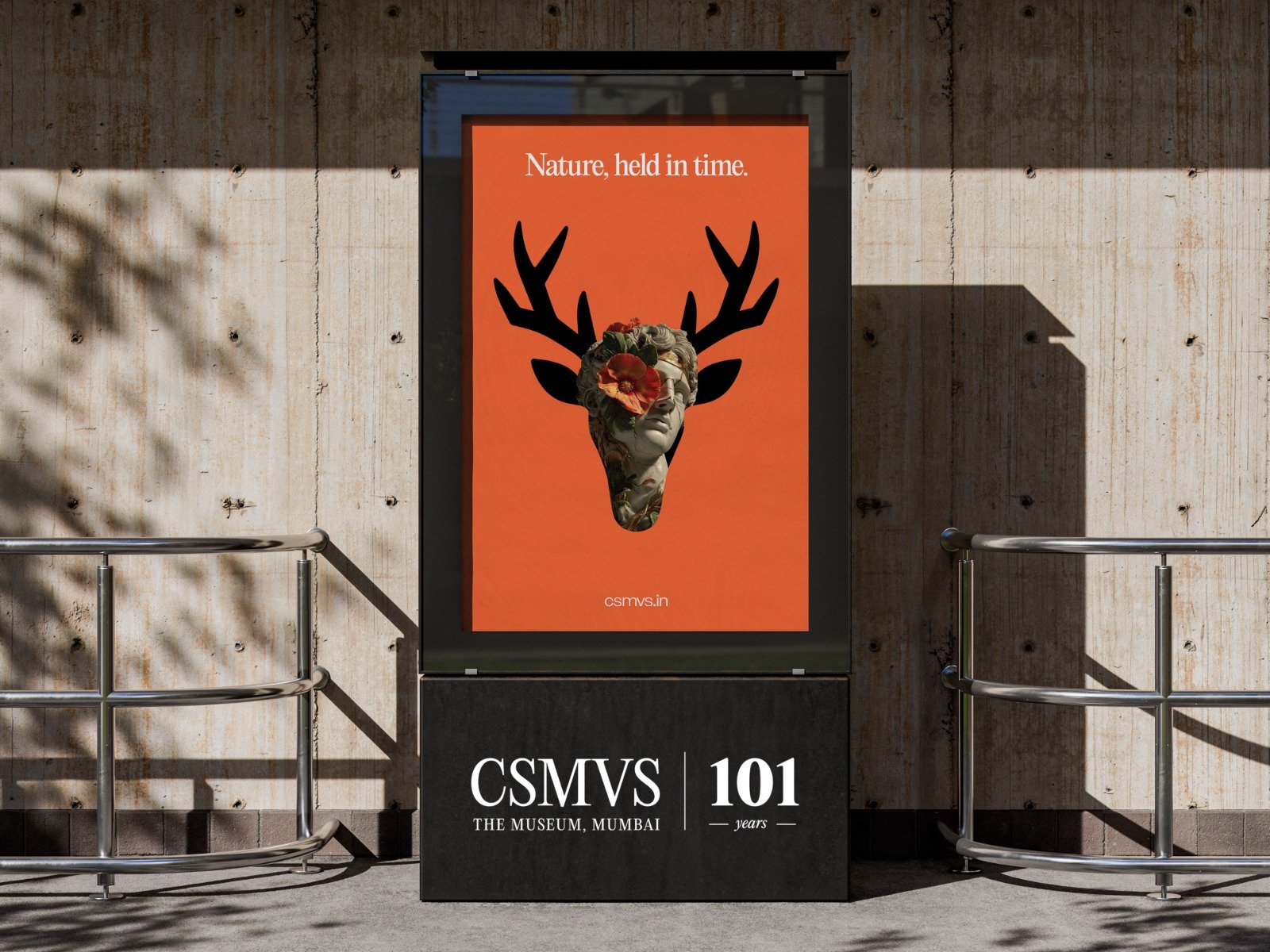
"Nature, held in time." - transit shelter placement
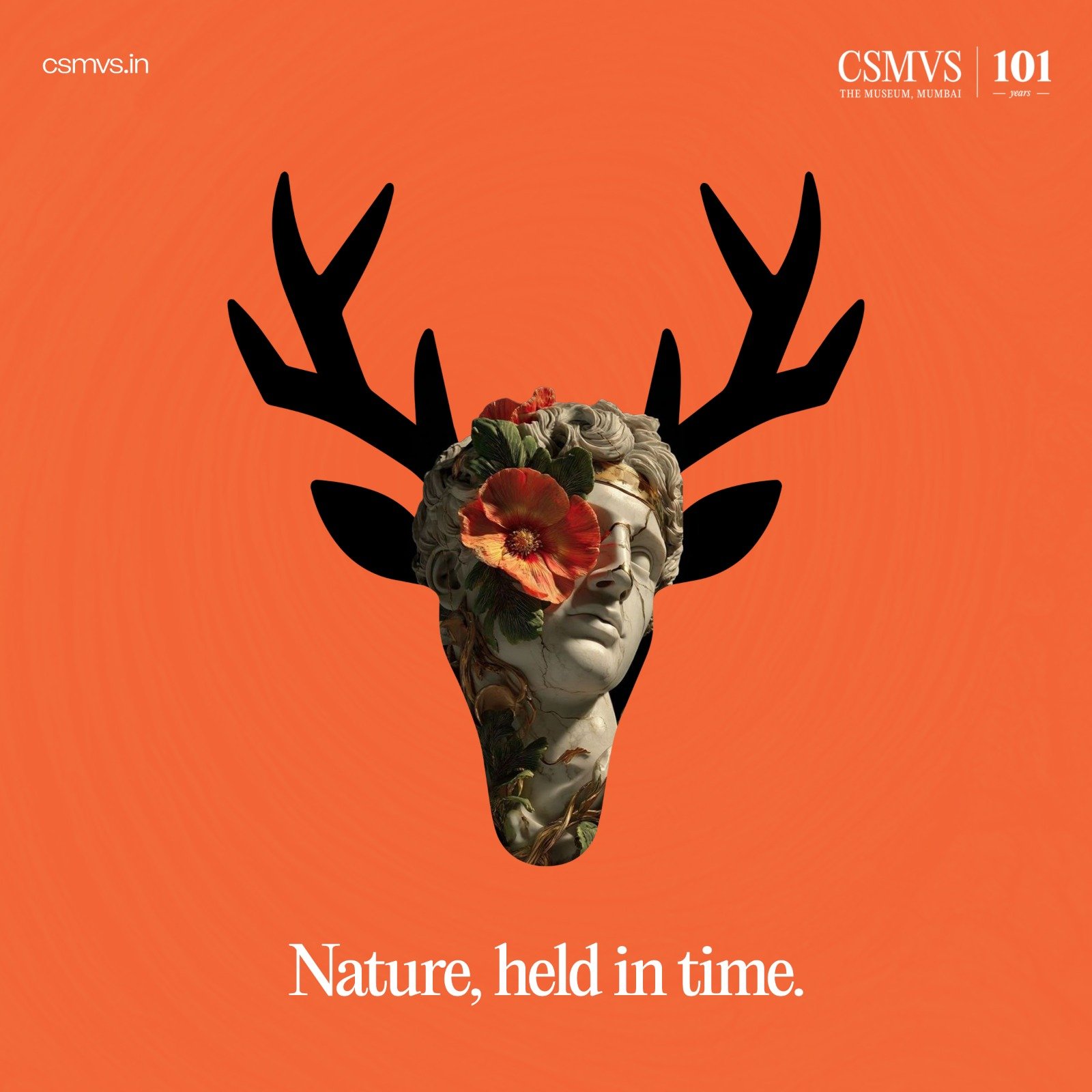
Campaign key visual - natural history meets sculpture
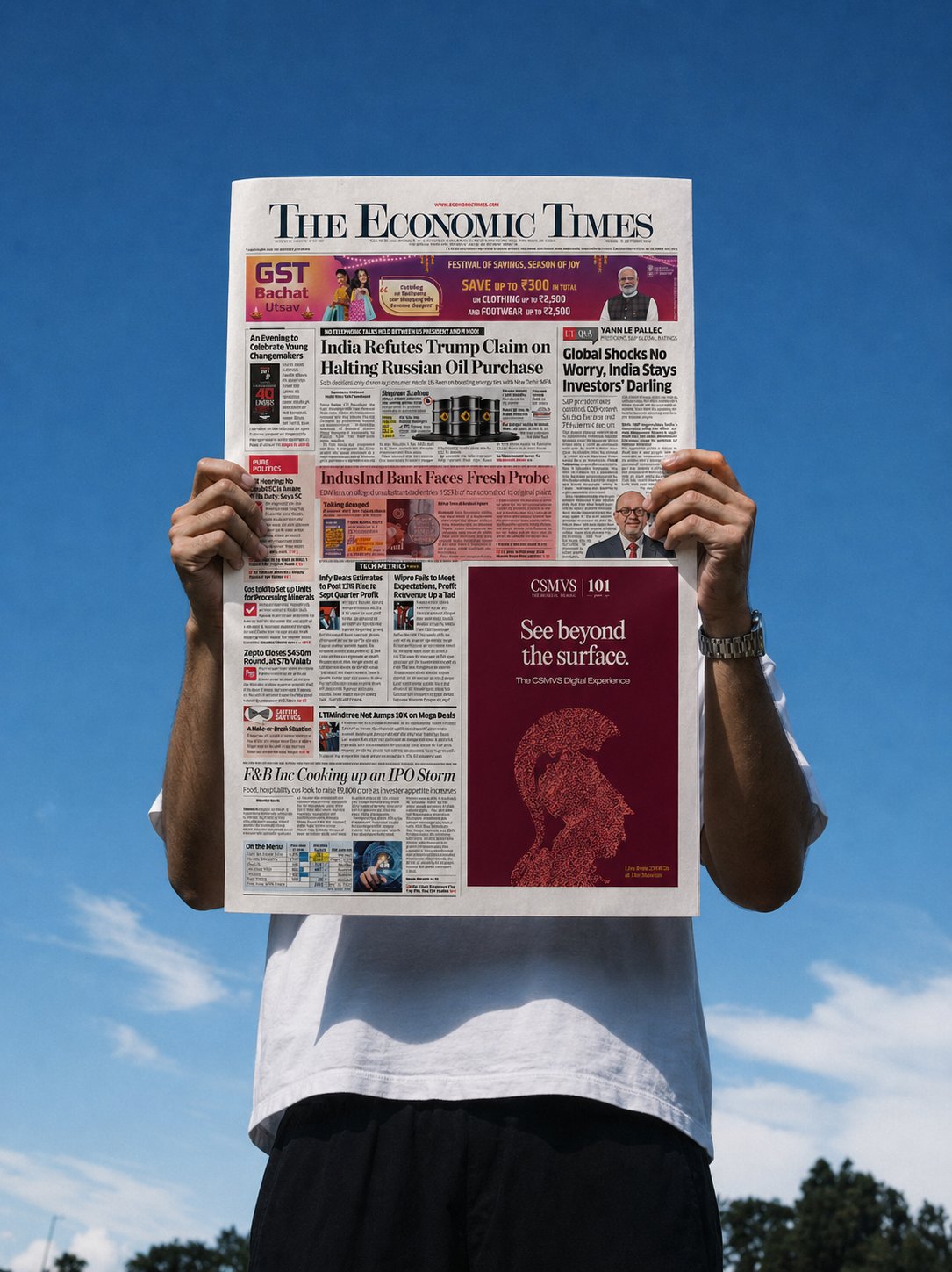
"See beyond the surface." - full-page placement, The Economic Times
"Events at a Glance" - the monthly programme zine
The identity has to survive contact with a wallet, a backpack, a lanyard.
Access cards double as wayfinding - Member, Staff, Student and Visitor passes each carry a different motif and colour, so the system is legible at a glance before anyone reads a word.
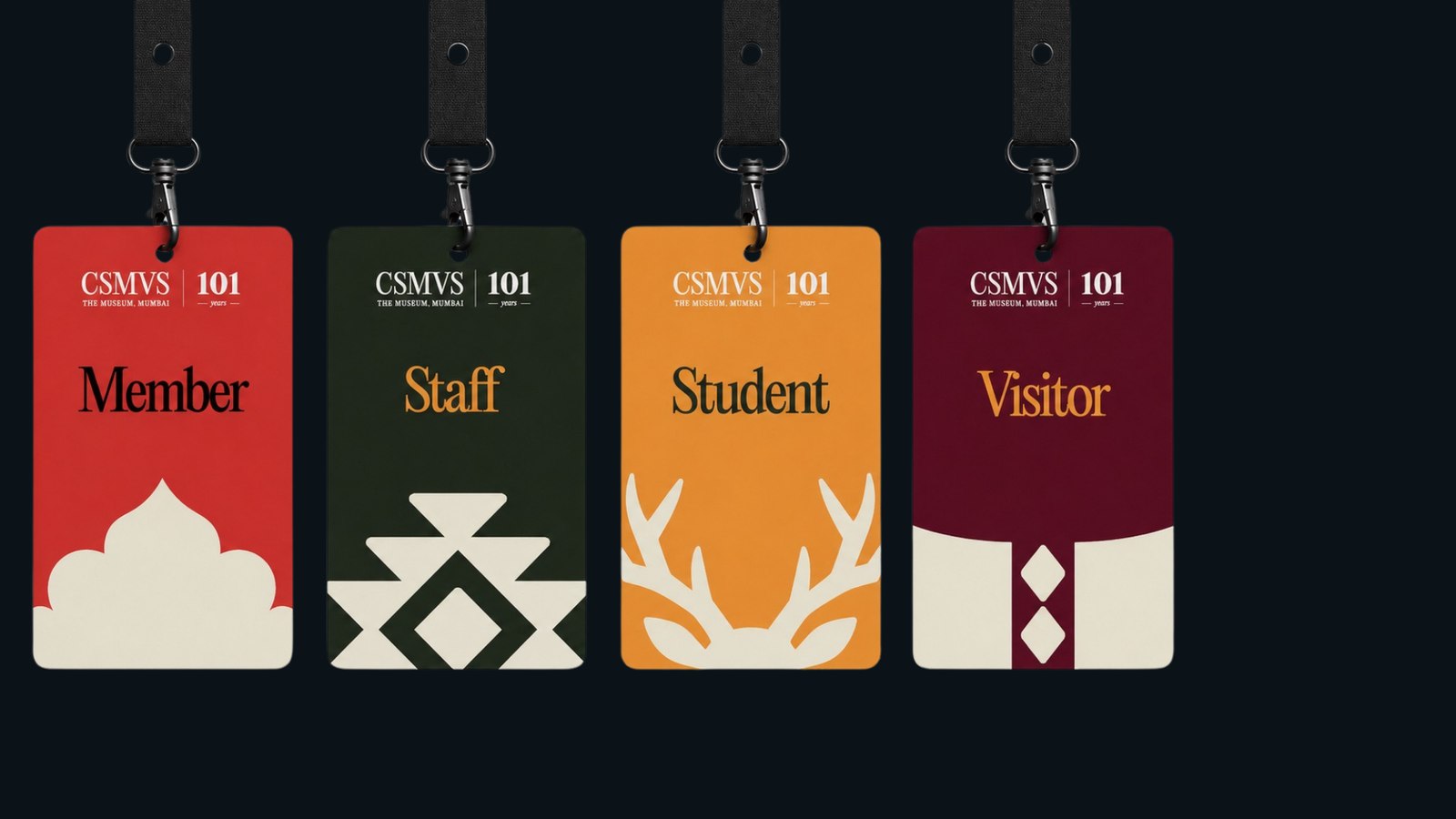
Member, Staff, Student and Visitor passes - colour and motif-coded
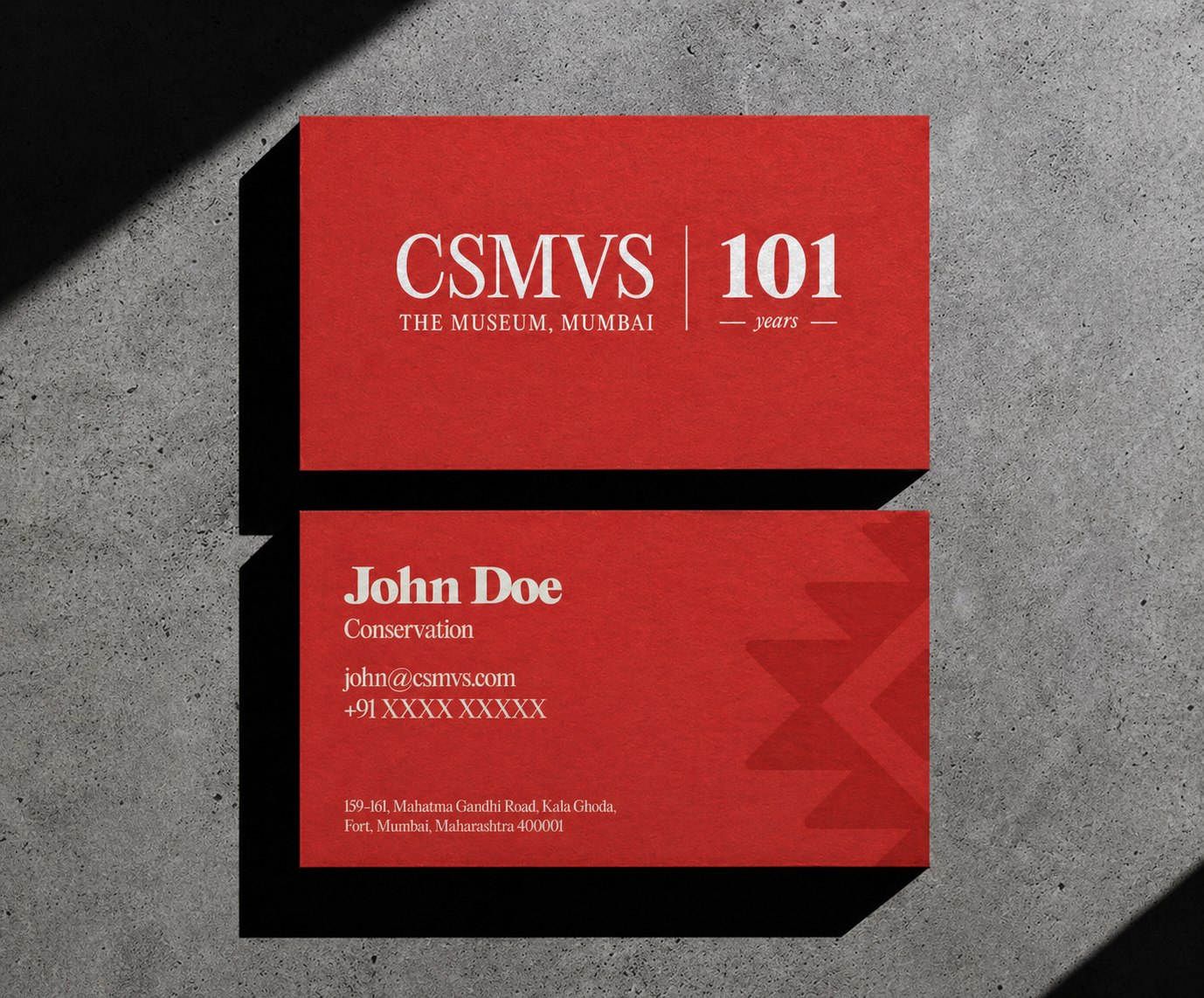
Stationery - logo application
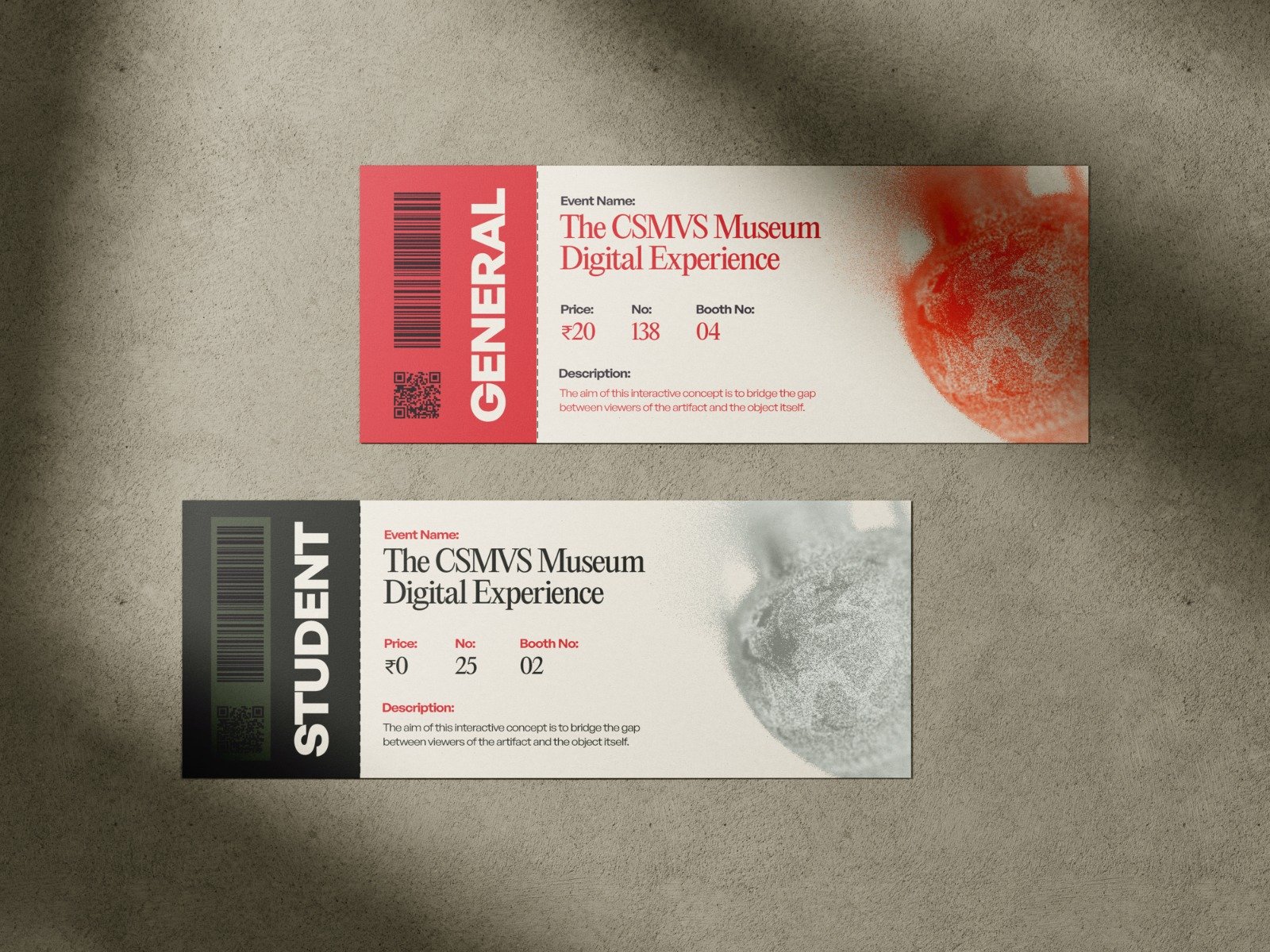
General (₹20) and Student (free) entry tickets - accessibility built into pricing
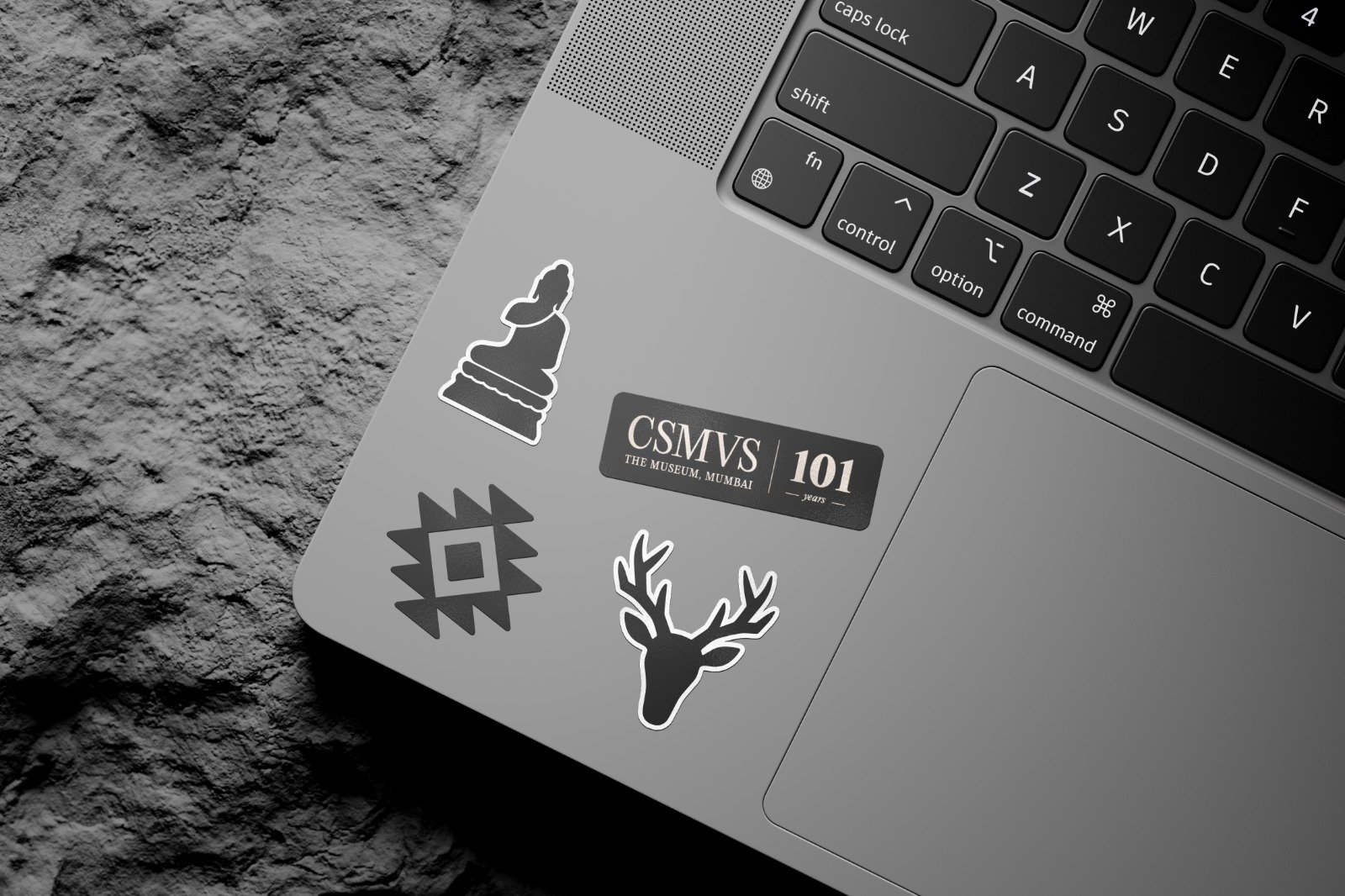
Motif sticker sheet
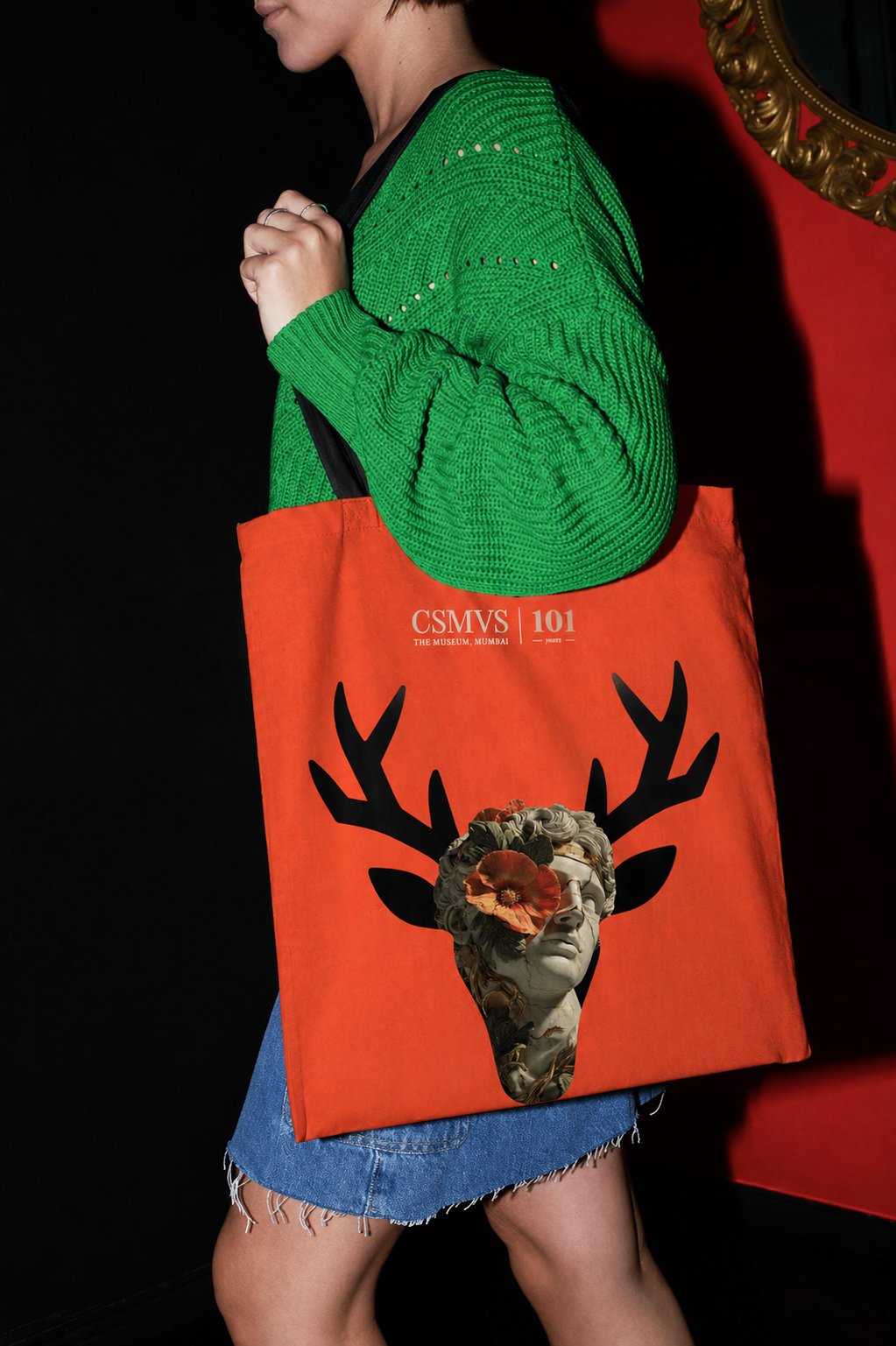
Tote bag - merchandise
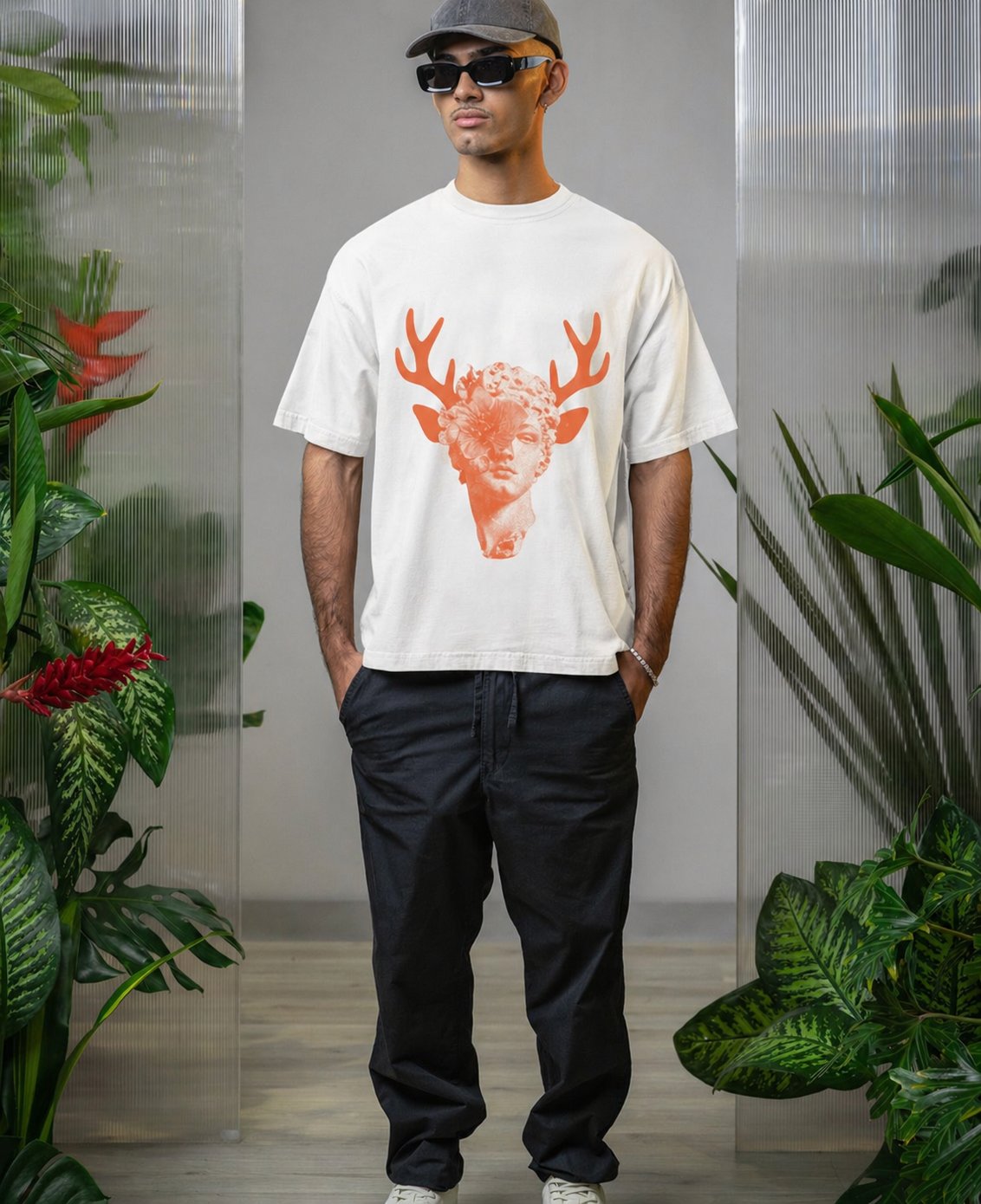
T-shirt - front print
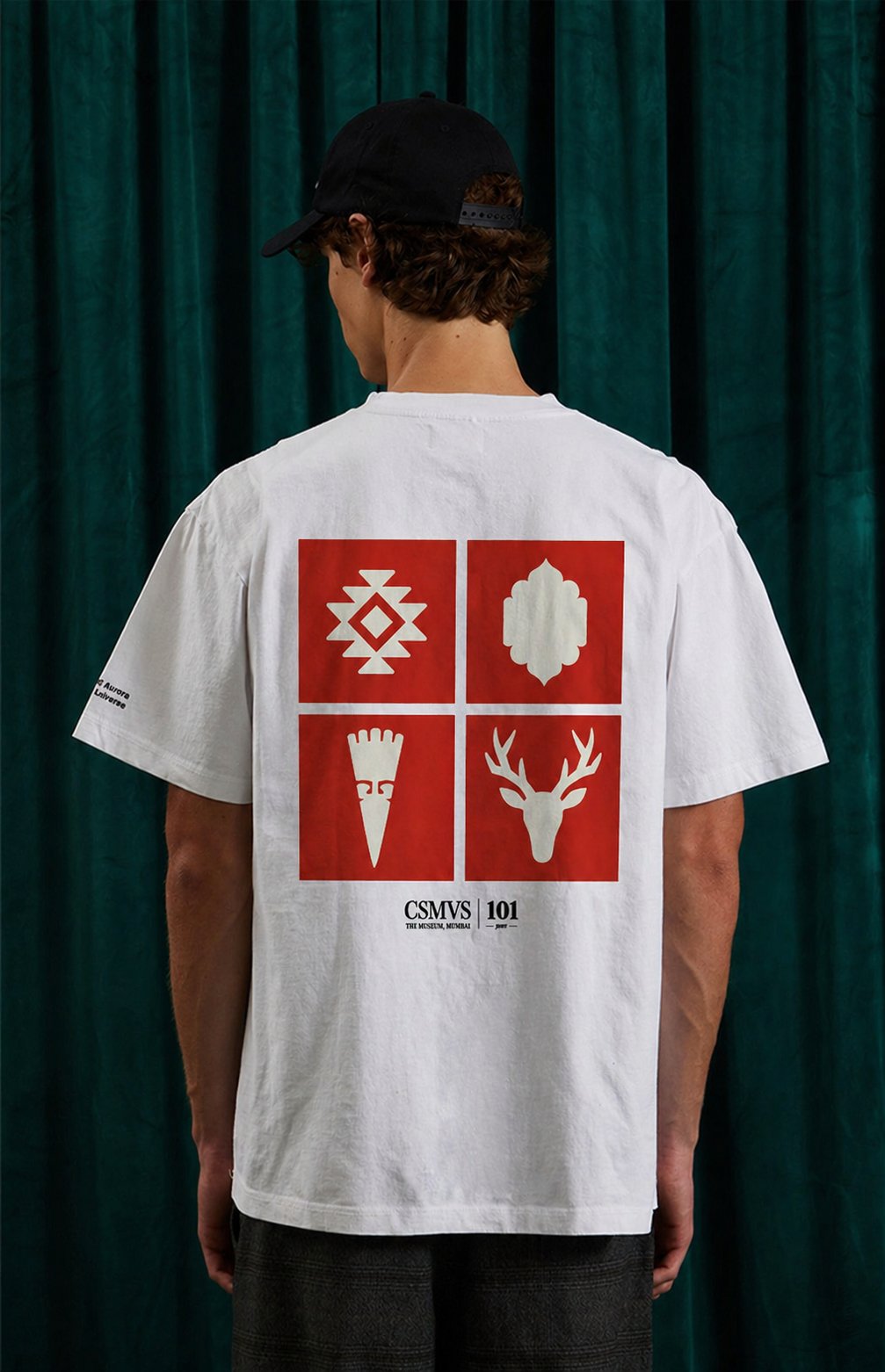
T-shirt - back print
Making fragile history touchable, without touching it.
The rebrand gets people through the door. What keeps them there is a change in how the collection itself is experienced - two concepts designed to work with the museum's existing infrastructure, not against it.
01
Gesture-tracked 3D interaction
Small, sensitive artifacts - coins, vases, sculptures - are 3D scanned and projected in large format. Gesture-tracking cameras let visitors rotate and examine the object in real time, closing the gap between viewer and artifact without putting anything valuable at risk or keeping it locked behind glass.
02
Networks of the Past - QR guide webapp
Visitors answer a few questions on arrival; the app curates a personalised route based on their interests. Scanning a QR at each display reveals an artifact's journey and its place in the network of ancient civilisations, filling in a progress map that nudges people toward corners of the museum they'd otherwise walk past.
Taking the museum to campuses that have never seen it.
"Think Museum" campus pop-ups
Students work with curators to select themes and build displays using high-quality facsimiles, 3D-printed replicas and research data.
Museum on Wheels
A travelling bus carries curated exhibitions - replicas, antiquities and interactive kits - directly to a requesting campus.
Educational loan kits
Miniature exhibitions built from high-resolution graphic panels and tactile replicas that students can actually touch.
Digital image licensing
Colleges can apply for high-resolution digital scans of manuscripts from the CSMVS Research Library.
"Liked the interactive idea. Shared current resources for refreshing, and had a detailed discussion about future scope and installation of the interactive element."
- Nikhil Ramesh, Curator, CSMVS
What made this harder than a visual refresh.
Communication delays
Working with a government institution meant periods of one to two weeks without feedback, slowing every iteration cycle.
Alignment on direction
Reaching a solution that satisfied both institutional expectations and contemporary audience needs took multiple rounds.
Branding vs. experience
It became clear early on that a purely visual rebrand wouldn't solve the core issue - the interactive layer was necessary, not optional.
Defining the audience
We explored several audience groups before narrowing focus to digitally native youth as the primary lens for every decision.
Sustainable Cities and Communities
By combining a refreshed identity, storytelling-led campaigns and interactive technology, the solution repositions CSMVS as a living cultural presence rather than a static archive - strengthening cultural engagement so heritage keeps being experienced, not just preserved, by the generations that come after.